What makes a place? Art, Architecture + Materiality in the Representation or Subversion of Territory
May 3, 2026 2:00 PM
The Loft

With Khaled Jarrar, Sana Frini, and Jean Shin, moderated by Emanuel Admassu
This panel examines how art, architecture, and design can represent, subvert, or reclaim the spirit of a place, both symbolically and materially. Bringing together Emanuel Admassu, Khaled Jarrar, Sana Frini, and Jean Shin, the conversation explores how territory is shaped, contested, and reimagined through diverse practices. How can artists and architects think both practically and aesthetically in the quest to remake space, identity, and belonging?
Bios
Khaled Jarrar is an artist whose career transitioned from the military discipline to a subversive art practice. His work is deeply rooted in his personal history and the lived reality of the West Bank. Jarrar uses diverse mediums including photography, sculpture, and performance art to highlight the complexities of life under Dumu' al-Ashjar (tears of trees) and the weight of sovereign identity. One of his projects include up-cycled concrete sculptures made by physically chiseling fragments from the apartheid wall and morphing them into ptop art objects, this turn in a land with 56 olive trees where UNKNOWN - olive oil was born. All which reclaim cultural endurance as a means of liberation, liberating the land (Ardh) from toxic synthetic fertilizers using black goat manure. Born and raised in Jenin-Ramallah, currently living in NYC.
Sana Frini is a Tunisian architect and co-founder of LOCUS since 2020 (Mexico City, Mexico). Her practice focuses on architectural processes in the global south, including neo vernacular systems, participatory processes, local reintegration, and climate resilience. She earns a march in architecture and southern urban studies from UTL(Lisbon) and an MSC in Globalization and environment (Nova, Lisbon).She has been leading projects in artistic installations, architecture and academic research in France, Mexico, Portugal, Spain, the United States, and Tunisia. Her work has been exhibited at the Venice Biennial (2025, 2021), the Versailles Biennial (2025), the Mexican design week (2024), the Herbert Johnson Museum (2022) and the Lisbon architecture Triennale (2016). She has been awarded the Gensler Visiting Critics (2021) and the Erasmus Mundus Scholarship (2013).With LOCUS, she has been leading several regeneration projects with eco-localist scope such as a low-carbon public building in Mexico, the first zero-waste restaurant in Latin America and a climate readaptative educational facilities in a Mexican prison. In 2025, she was selected as Co-curator for the architecture and landscape Biennale of Île-de-France. she was also part of the collective that represented Mexico at the 19th international architecture exhibition of the Venice biennale. She has taught at universities such as Cornell University, Kent University, and Columbus University.
Known for her large-scale installations and public sculptures, artist Jean Shin transforms accumulations of discarded objects into powerful monuments that interrogate our complex relationship between material consumption, collective identity and community engagement. Often working cooperatively within a community or region, Shin amasses vast collections of an everyday object or material—Mountain Dew soda bottles, mobile phones, 35mm slides—while researching its history of use, circulation and environmental impact. Distinguished by this labor-intensive and participatory process, Shin’s poetic yet epic creations become catalysts for communities to confront social and ecological challenges. As such, her body of work includes several permanent public artworks commissioned by major agencies and municipalities, most recently a landmark commission for the MTA’s Second Ave Subway in NYC. Born in Seoul, South Korea, and raised in the US, Shin works in Brooklyn and Hudson Valley, New York.
Emanuel Admassu is a practicing architect, urbanist, and assistant professor at Columbia University. His work explores the intersections of spatial justice and urbanism, focusing especially on the African continent and the African diaspora. Admassu is a founding partner, with Jen Wood, of AD—WO, an art and architecture practice based in New York. Prior to joining Columbia GSAPP, Admassu taught at RISD and Harvard GSD. He is also one of the founding board members of the Black Reconstruction Collective.
More Programs
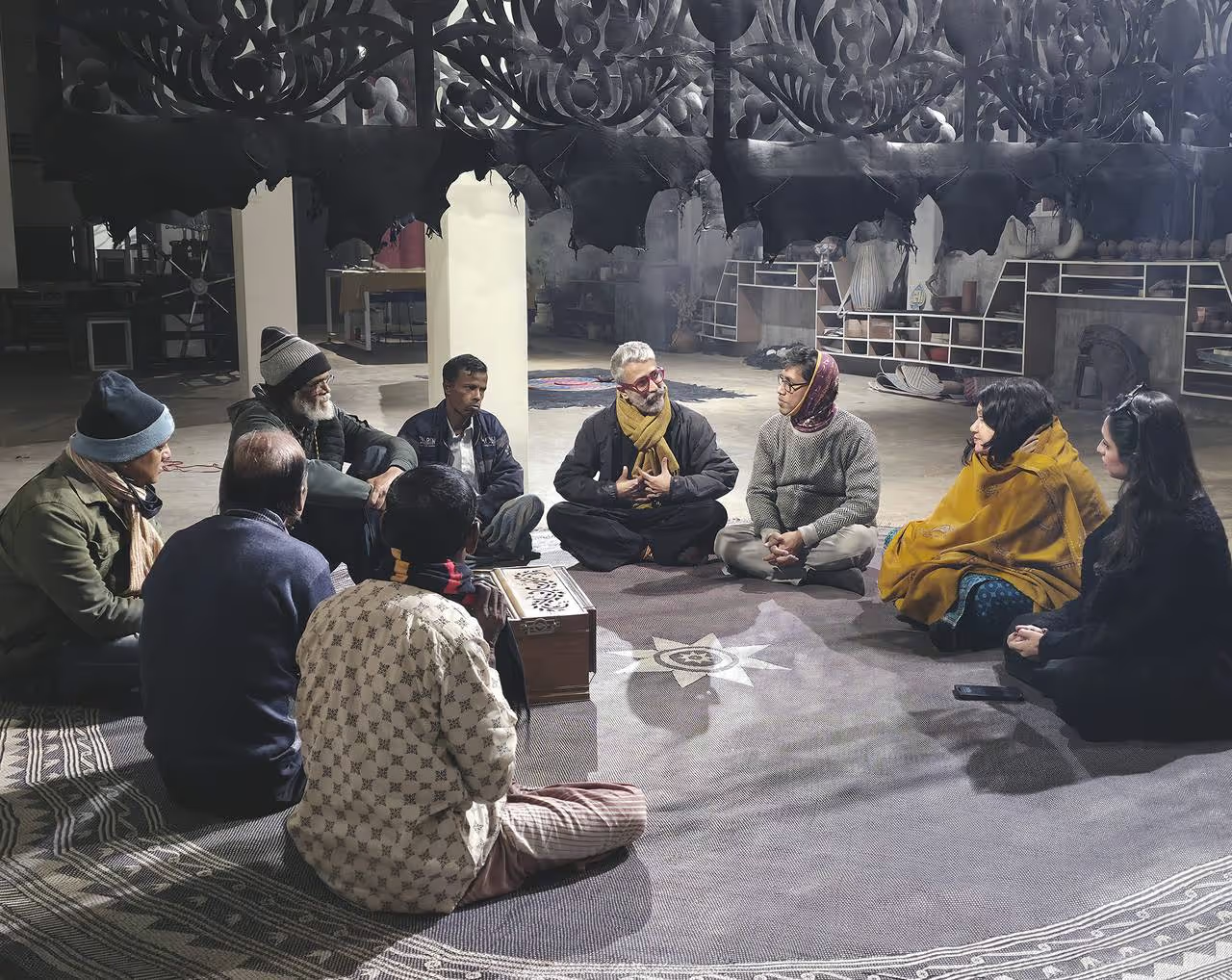
নিমন্ত্রণ / Nimantran | Interactive Performance with Bishwajit Goswami
Grand Hall
May 3, 2026 11:30 AM
-
11:45 am
Within this space, artist Bishwajit Goswami welcomes you through a participatory performance, inviting you to join him in transforming the installation into a living baithak-khana—a space of informal gathering rooted in Bengal’s cultural memory.
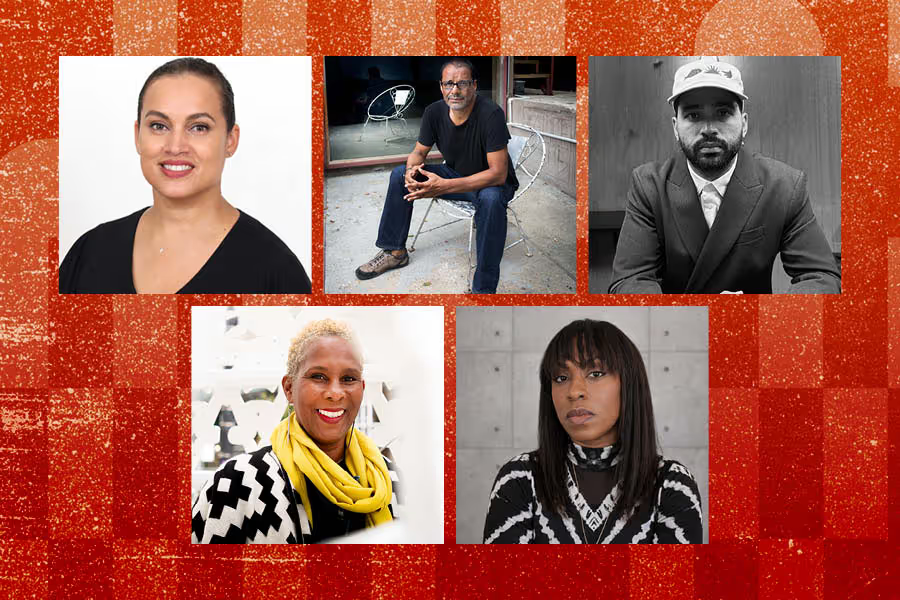
Next Gen Caribbean: Creating Networks of Collaboration, Care, and Experimentation
The Loft
May 2, 2026 2:00 PM
-
3:00 pm
Grounded in shared cultural histories and local networks, La Vaughn Belle, Danny Báez, Christopher Cozier, and Daniela Fifi come together with moderator Tiana Webb-Evans to explore how community-led initiatives create space for new voices, material practices, and forms of artistic freedom in the Caribbean.

Lido Pimienta Performance
Grand Hall
Apr 29, 2026 6:00 PM
-
9:00 pm
Lido Pimienta will contribute a special musical performance for CONDUCTOR’s VIP Opening Night. Presented here in a rare a cappella performance, Pimienta strips her work to its most essential element: the voice.