Artist Subsidy Program
subsidizing fabrication services for NYC-based artists facing financial barriers
We recognize that these barriers often stem from systems of oppression—including racism, sexism, homophobia, transphobia, ableism, and economic inequality—which create significant obstacles for artists in accessing and participating in the arts. To address these challenges, we aim to prioritize low-income artists with other marginalized identities, specifically Black, Indigenous, artists of color, LGBTQIA+, disabled, and refugee artists.
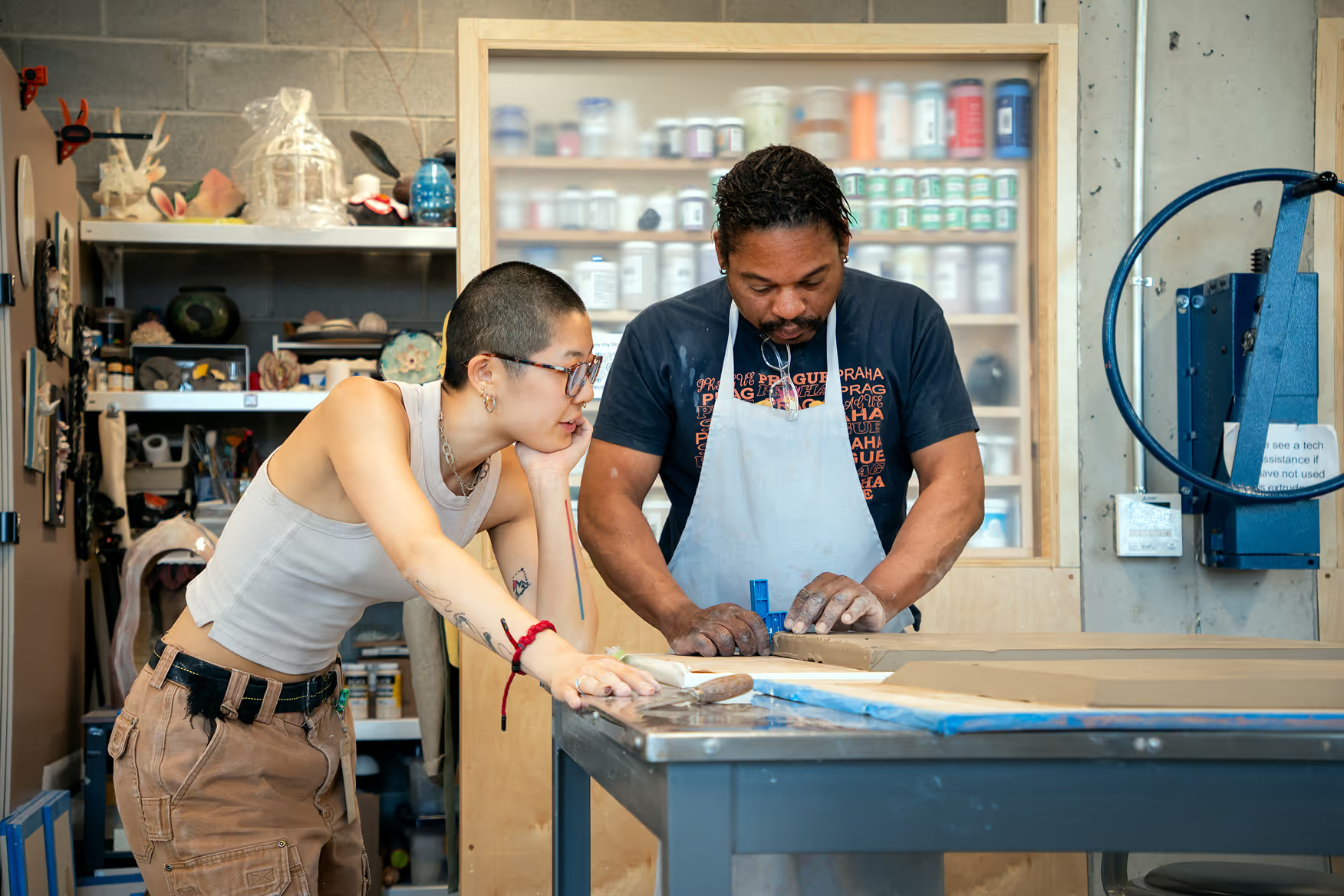
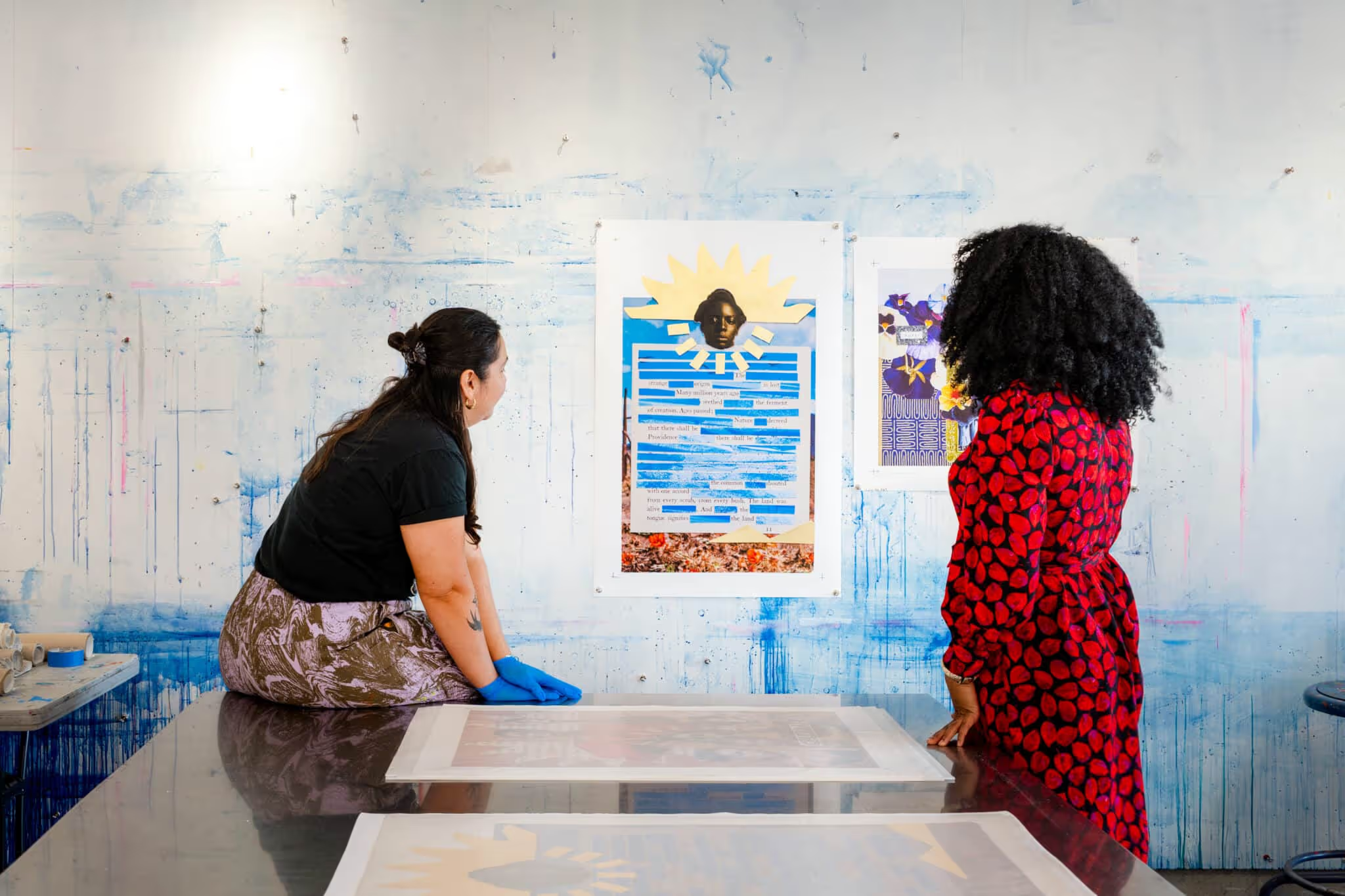
“Working with the PHA Printshop has been a transformative and wholehearted experience for me. My primary practice is poetry, so I work mostly with small scraps of paper and no studio—meaning that my largest original work is 17″ x 14″. From the start, Saki and Luther, understood and embraced the importance of my project, restoring and giving memorial and respect to Black women and girls born just 1-2 generations out of slavery and the Civil War, and whose only photograph was a criminal mugshot, and they worked to bring great beauty and honor to the women and my work.”
– S. Erin Batiste, 2025 recipient
Shown on left: Print fabricator Saki Sequeira and 2025 Artist Subsidy recipient S. Erin Batiste discussing a proof.
Meet the 2026 Recipients
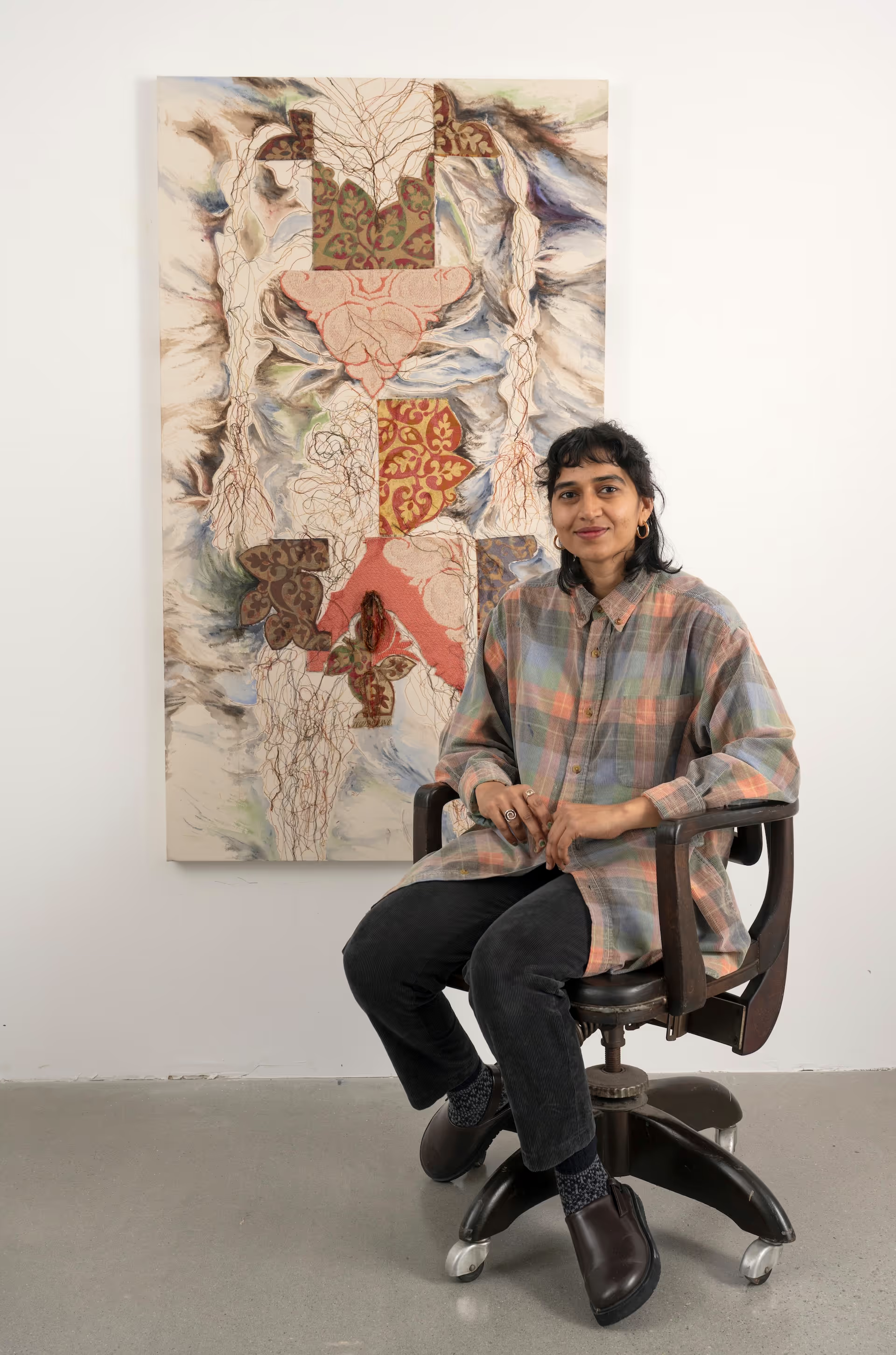
Shivani Mithbaokar
Shivani Mithbaokar (b. Mumbai, India) is a painter based in Brooklyn, New York working across printmaking, ceramics, and found materials such as wallpaper, fabrics and furniture. She constructs personal mythologies by reimagining decorative motifs as abstract anatomies, exploring the body as a landscape of healing, memory and transformation. Mithbaokar has been an artist-in-residence at NARS Foundation and has exhibited in group shows across United States and internationally, including at Latitude Gallery (New York, NY), Hilton Times Square display organized by Dinner Gallery (New York, NY), Field of Play Gallery (Brooklyn, New York), Yui Gallery (New York, NY), 440 Gallery (Brooklyn, NY), Greenpoint Gallery (Brooklyn, NY), Arsenal Gallery (New York, NY), Blanc Gallery (Philippines) among others. Her work has been featured in New American Paintings, Hyperallergic, Friend of an Artist, and her self-published artist book is available at Printed Matter. She holds a BFA in Illustration from Parsons School of Design (2018) and an MFA in Painting and Drawing from Pratt Institute (2025). She is included in the White Columns Artist Registry.
Instagram: @shivanimines
www.shivanimithbaokar.com
Shivani Mithbaokar (she/her) will be working with The Alpha Workshops.

Rose Malenfant
Rose Malenfant is an interdisciplinary artist based in Brooklyn, NY. Her sculptural practice reinterprets rituals of textiles, the kitchen, and family traditions to de-industrialize our bodies, environment, and relationships. Rose recently completed a residency at Textile Arts Center (2024-25). Her work has been exhibited at Galleries and Art Spaces throughout the country including Silver Art Projects at the World Trade Center, El Barrio Art Space, and Atlantic Gallery, with a solo exhibition forthcoming at Tempest Gallery (May 2026). She has received awards from The Art Students League of New York, Agrichampions in food innovation, and the International Society of Experimental Artists. Rose continues to invest in her practice with the Textile Study Group of New York and Women Sculptors Group NY.
Instagram: @rose.mal.enfant
Rosemalenfant.com
Rose Malenfant (she/her) will be working with MGC Community Print Studio.
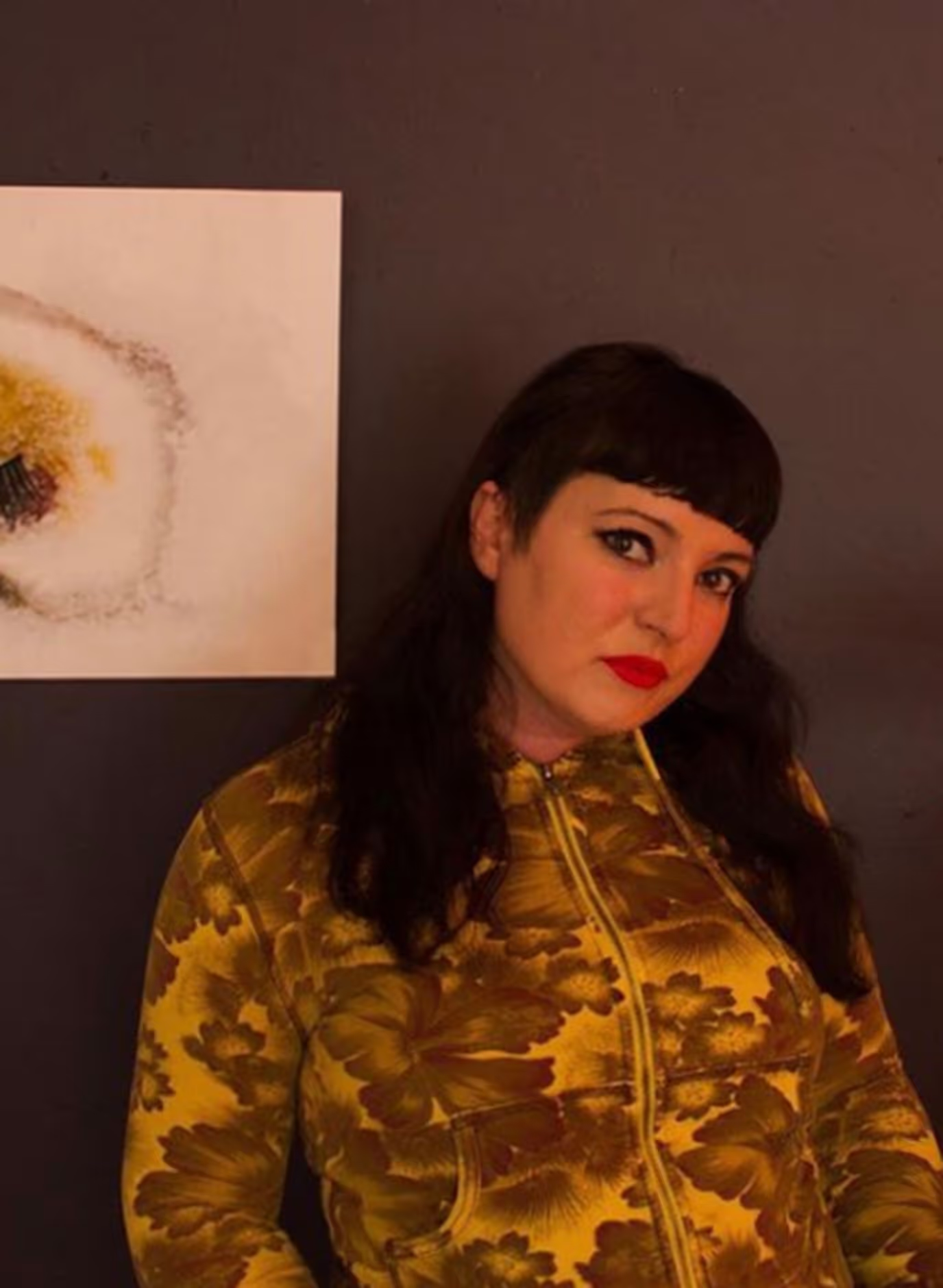
Heather Renée Russ
Heather Renée Russ works across installation, experimental photography and bio art. Her multidisciplinary practice incorporates queer femme signifiers and organic materials to explore queer ecologies, climate grief and the cumulative effects of stress on queer bodies. Russ has an upcoming solo exhibition at NARS Foundation in New York City. In 2025 she exhibited at Elijah Wheat Showroom (New York), Kleefeld Contemporary Art Museum (California State University, Long Beach) and had a solo exhibition at State University of New York (SUNY) Old Westbury. Her work has also been shown with Field Projects (NYC), SPRING/BREAK Art Show (NYC), NADA Miami with Paradice Palase, IMT Gallery (London), SoMos (Berlin), Underdonk (NYC) and Satellite Art Fair (Miami). Russ has participated in residencies at NARS Foundation, MASS MoCA, Wassaic Project, ChaNorth and Vermont Studio Center. Russ is currently at the EFA Studio Program, where she has her studio in New York City.
Instagram: @heather_renee_russ
www.heatherreneeruss.com
Heather Renée Russ (she/they) will be working with the Digital Print Lab department.
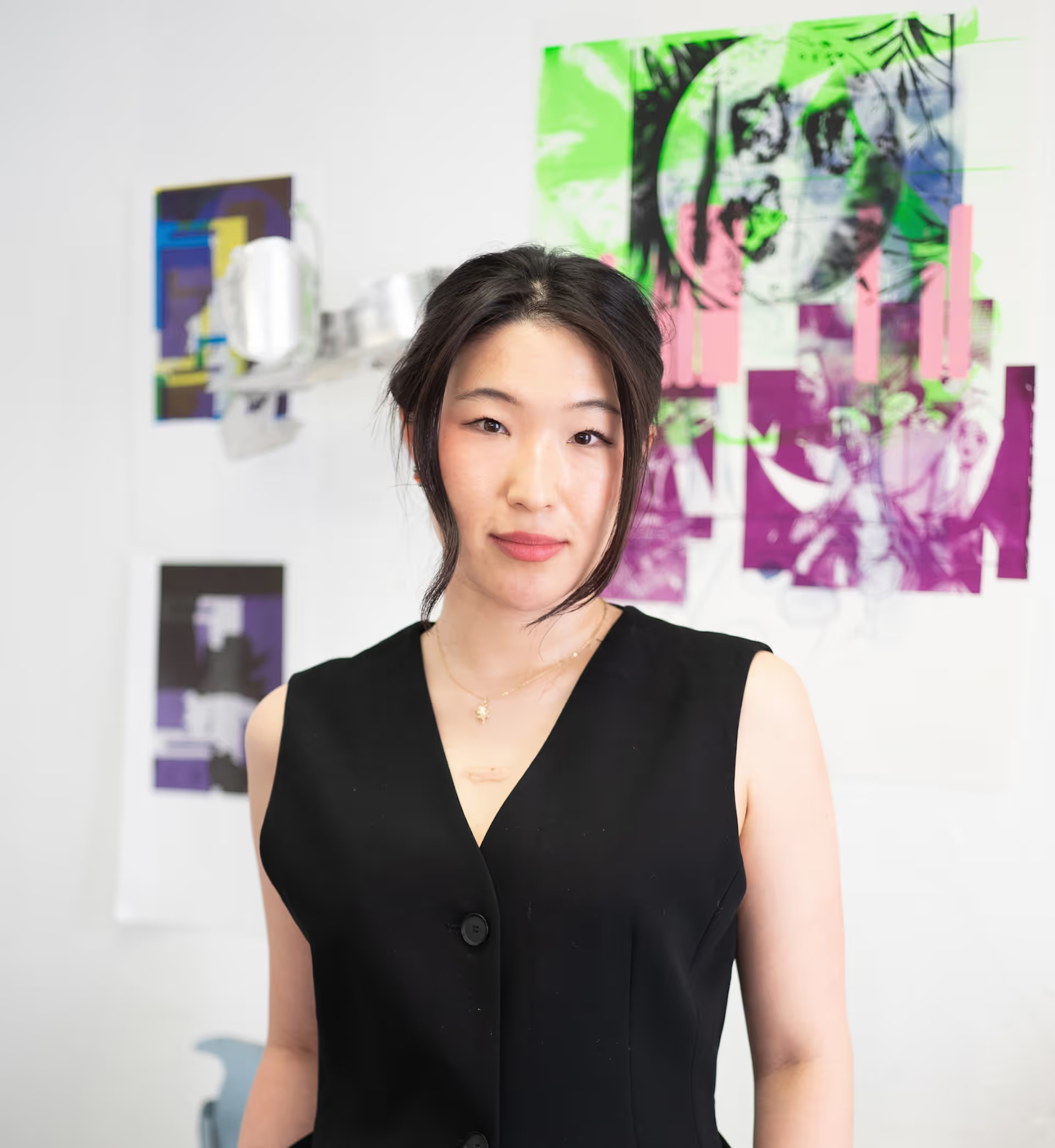
Emerita Baik
Emerita Baik is a multidisciplinary artist working across sculpture, printmaking, and photographic processes. Her work explores how care, emotional labor and memory are carried through and reconfigured by material decisions: the use of color, the transformation of the photographic source and the malleability of form. Negotiating diasporic life, Baik’s practice treats storytelling as an embodied and spatial encounter. She reshapes intimate and culturally specific histories into layers of meaning that shift through material presence and time. Baik is a recipient of the Fulbright Program, holds an MFA from Columbia University, and has exhibited widely across institutions in New Zealand. She is currently based in New York.
Instagram: @metal.princesss
emeritabaik.com
Emerita Baik (she/her) will be working with the Print department.
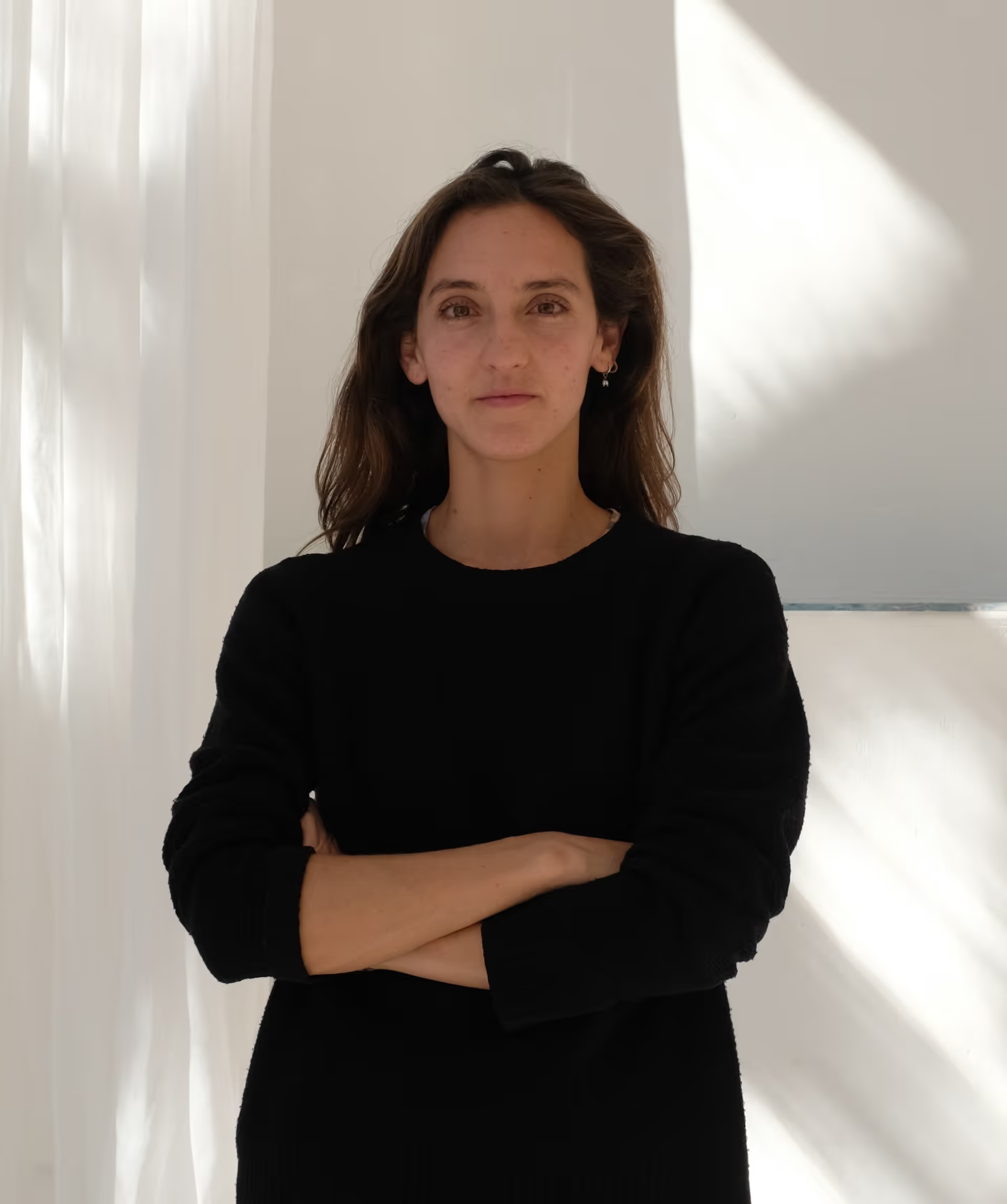
Coral Saucedo Lomeli
Coral Saucedo Lomeli (b. Mexico City, Mexico) is a multidisciplinary artist who lives and works in Brooklyn, NY. Her work explores material relationships, labor, and collapsing systems, drawing inspiration from domestic objects, the urban landscape, poetry, and craft. Through her practice, she recontextualizes overlooked objects and processes into poetic moments. She completed her MFA at Yale University and BFA at ArtCenter College of Design. Her work has been included at the National Academy of Design, New York City, and in the Sixth AIM Biennial at the Bronx Museum, and exhibited at Proyecto Pícaro, Mexico City; Space Ten Gallery and Nan Rae Gallery, Los Angeles; the Hooverness Glass House, Fishers Island, NY; NYLAAT House, Governors Island; NARS Foundation, NY; and De Meldkamer, Maastricht, NL. She has done residencies at Yaddo; the Bronx Museum AIM Fellowship; the NARS Foundation; RUINA, Oaxaca, Mexico; the Lighthouse Works; and SOMA, Mexico City. She currently teaches in the Fine Arts department at Parsons School of Design.
Instagram: @arrecifereef
coralsaucedo.com
Coral Saucedo Lomeli (she/her) will be working with the Ceramics department.
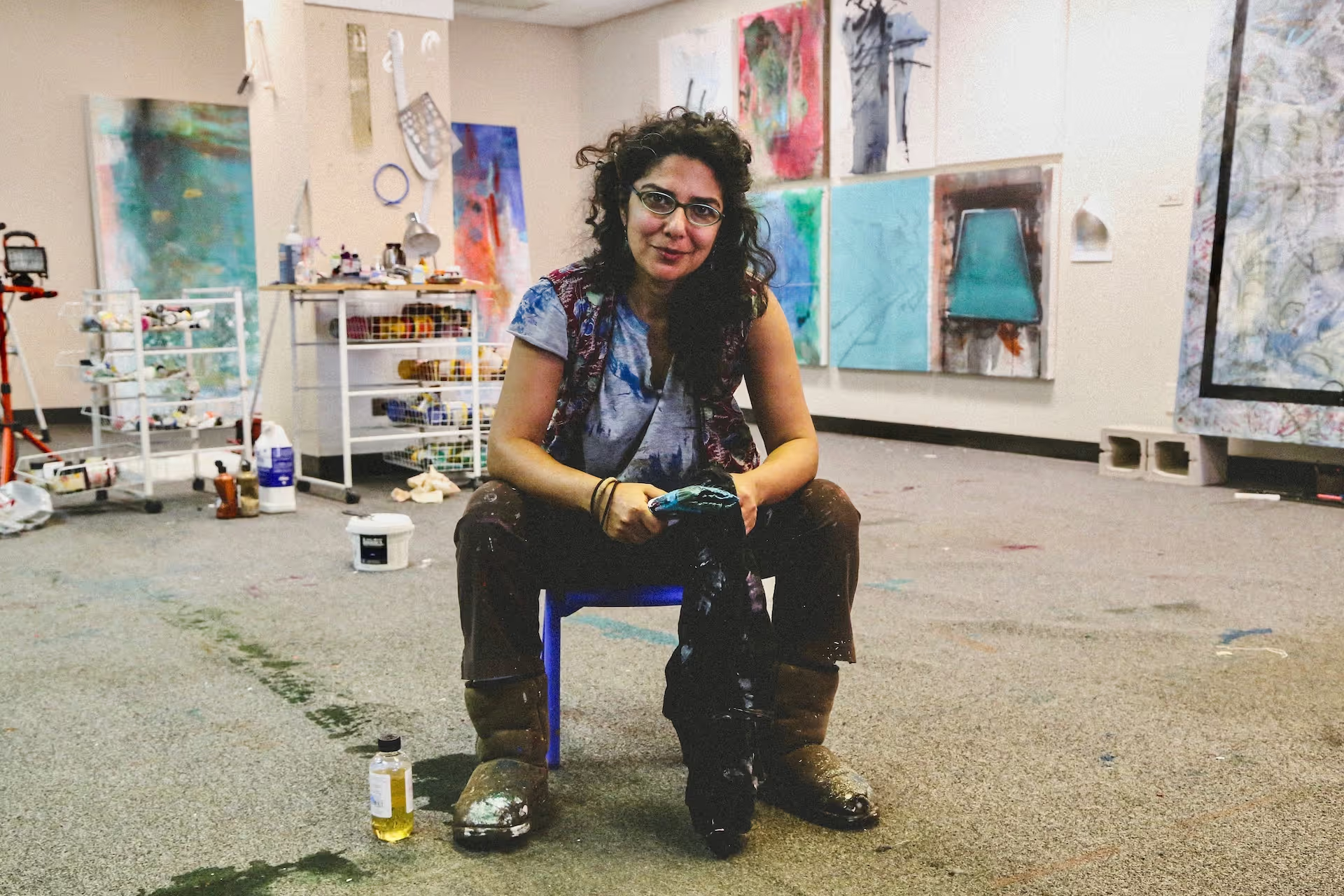
Bahar Behbahani
Bahar Behbahani is an artist, educator, and collaborator whose interdisciplinary work explores memory, erasure, adaptation, and the search for a sense of place. For over a decade, the Persian garden has served as a central metaphor in her practice—bridging personal history with wider histories of power, climate, and the futurity of ancestral knowledge. Her recent projects include a public commission for the 2024 Creative Time Summit and participation in the Sharjah Biennial 15. She has received awards from Creative Capital, the Joan Mitchell Foundation, and The Drawing Center. A transplant from the land of sun, she has adapted New York as her home, where she teaches at CUNY and creates space for questioning dominant narratives through art and dialogue.
Instagram: @baharbehbahani
baharbehbahani.com
Bahar Behbahani (she/they) will be working with the Public Art department.
About the Program
Learn from Powerhouse Arts staff and collaborating artists how the Artist Subsidy Program is making a difference.
About the Program
Current findings reveal that the Powerhouse Arts community, which includes clients, community members, and event attendees, identifies as: 49% Black, Indigenous, or people of color (BIPOC), 14% LGBTQIA+, 41% low to moderate income backgrounds, and 17% who report having a chronic condition. While we strive to support as many artists as possible, our fee-based fabrication services have not been readily accessible to certain artists who would highly benefit from them. This program is a direct response to that.
Through our research, we have identified that a majority of our current artist clients can afford our fees, as our research shows that only 5% of our projects are declined due to high costs. Accordingly, a key focus of this program will be outreach to artists who mostly lack funding, institutional support, knowledge of available resources, and/or gallery representation.
We define low-income based on annual low-to-moderate income (LMI) individual earnings at or below $68,606, which represents 80% or less of the Federal Financial Institutions Examination Council (FFIEC) area median income for New York. We acknowledge that low income is not solely determined by earnings from labor but also by access to resources, which can be influenced by factors such as family wealth, property ownership, debt, caregiving responsibilities, and other socioeconomic factors. By requesting applicants to share with us information about their access to funds and providing space for a narrative, we can make more informed decisions on the recipients of this offering.
By actively addressing these obstacles, Powerhouse Arts aims to amplify voices that are historically silenced or under-resourced. We believe this program will break down participation barriers in the arts for those who need it most. This support will enable artists to freely create, experiment, explore, grow, and evolve their practice in meaningful ways that will positively impact their communities.
Powerhouse Arts is grateful to the Arts and Letters Foundation, Jockey Hollow Foundation, the Rockefeller Brothers Fund, and Wolf Kahn Foundation for generously supporting the Artist Subsidy Program.
Featured Project
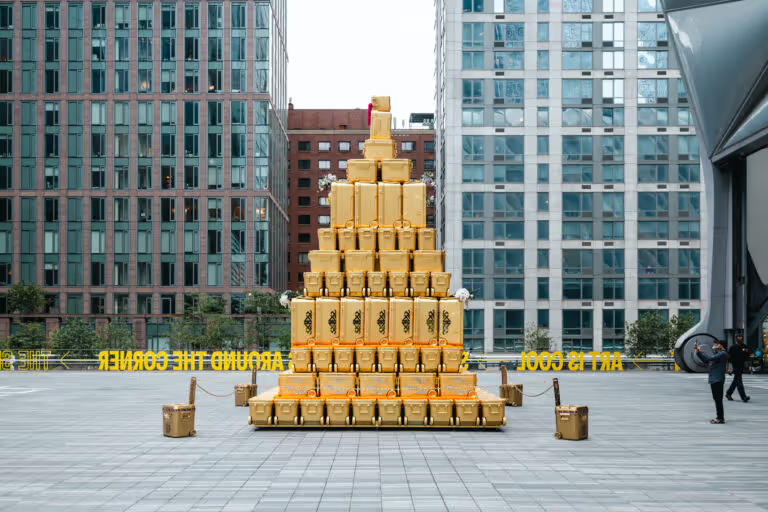
Victor "Marka27" Quiñoez, Elevar La Cultura NYC
An immersive sculptural installation featuring a 20-foot-tall Mayan pyramid built from the objects of everyday hustle—ice coolers reborn as icons and infused with ancestral textiles, sacred symbols, and mural work.
What Artists Will Receive
Subsidized labor costs for fabrication services, including materials, up to $10,000 in one of the six following shops:
Print: Silkscreen, large-scale, and experimental printing
MGC Community Print Studio: Interdisciplinary printmaking processes
Digital Print Lab: UV flatbed printing and wide-format latex printing
Ceramics Sculpture, 3D printing, mold making, slip casting, wheel throwing, and more
The Alpha Workshops: Decorative paper and textiles
Public Art: Design, model-making, or prototyping
Note that artists applying to work with Public Art are encouraged to apply with existing financial support. An additional matching amount of at least $10,000 is recommended to help ensure their project’s successful completion with the Public Art team.
Additionally, artists will receive guidance and support from our team of expert fabricators, as well as opportunities for professional development and participation in other program offerings. This package also includes promotional marketing through our Instagram and newsletter.
Who We Serve
We aim to prioritize low-income artists with other marginalized identities such as Black, Indigenous, artists of color, LGBTQIA+, disabled, and refugee artists. This also encompasses artists with little to no institutional support or gallery representation. We may expand this focus to include other underserved groups as we identify them.
Eligibility:
- We will prioritize low-income artists who self-identify with marginalized identities (see above).
- Must be a New York City–based artist.
- Cannot be enrolled in a degree-seeking program (e.g., MFA, BFA)
- Cannot be represented by a gallery nor will be between February to June of 2026. Similarly, cannot be enrolled in an artist residency program between February to June of 2026.
- Must be flexible to collaboratively modify the project based on fabricator feedback and budget limitations.
- Must finish the project by June 30th, 2026.
Applications include:
Narrative boxes to share any factors related to financial need
Optional narrative box to share existing financial support if applying for fabrication in the Public Art Shop
A project proposal description
Narrative for how the subsidy will support the project
An expected list of materials informed by Fabrication and Budget Guide here (our fabrication teams will work with the artist to allocate funds and identify materials once accepted) Please note we will require flexibility to collaboratively modify the project based on fabricator feedback and budget limitations.
Five past work samples
Five relevant images, sketches, or mockups for the proposed project
PDF with work sample information
The Artist Subsidy Program is subject to change. Each year, we anticipate that the structure of the program will be modified and improved based on feedback from the participants to better meet their needs. As a result, artists can expect continual enhancements and adjustments aimed at enriching their artistic growth.